Resource library
Search by topic, choose a year or explore everyday resources for school and home.
Year filters also include reusable resources marked All Years.
Year 5
Book Review
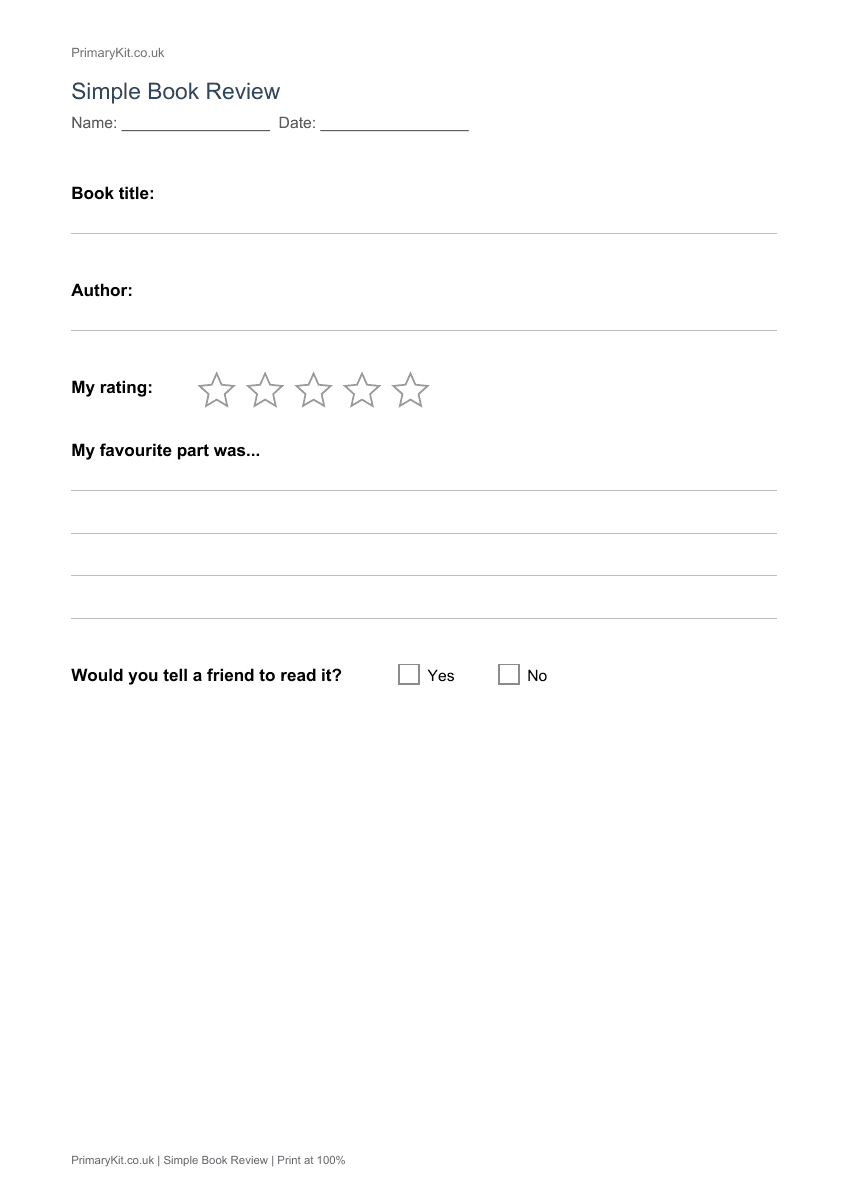
Short review layout: title, author, star rating, and favourite part lines. Quick enough for weekly homework without overwhelming early writers in KS1 and lower KS2.
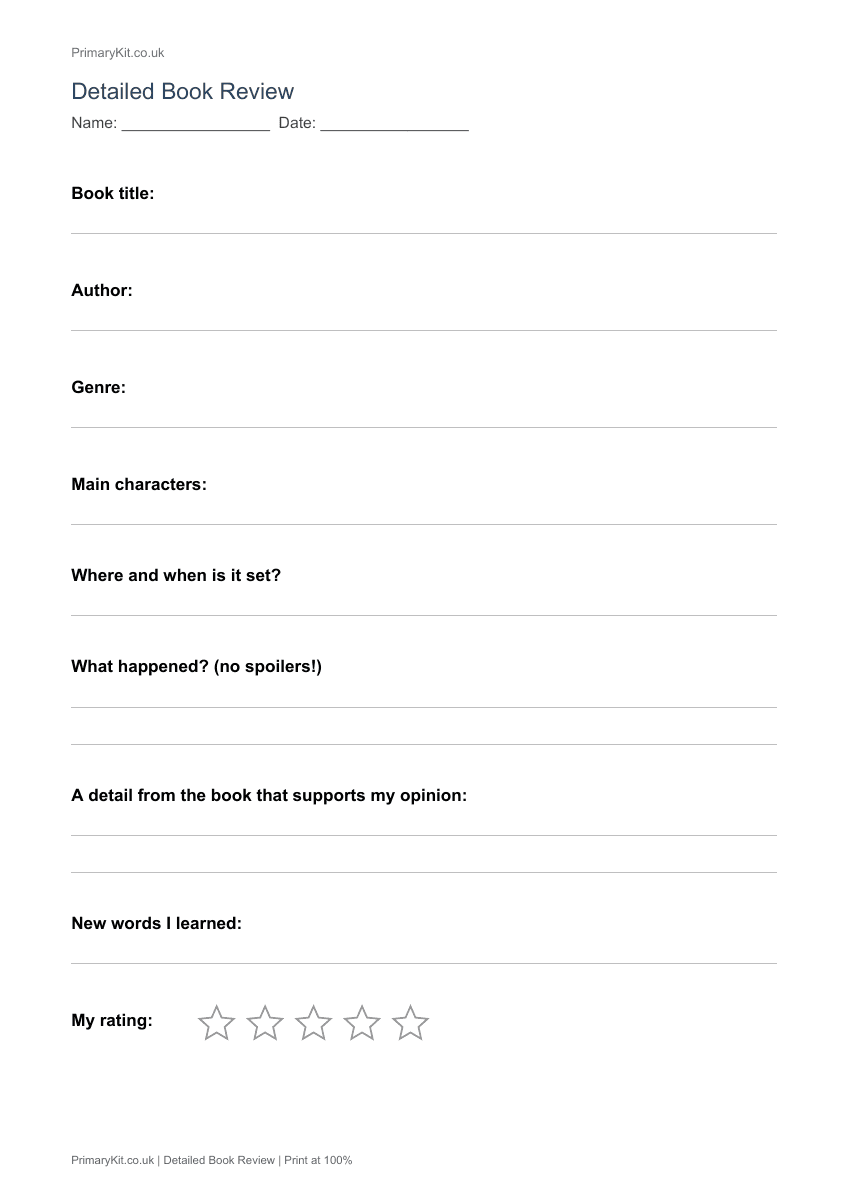
A one-page review with title, author, genre, characters, setting, plot summary, evidence for an opinion, new words and a star rating. Designed for confident writers who can refer to details in the text.
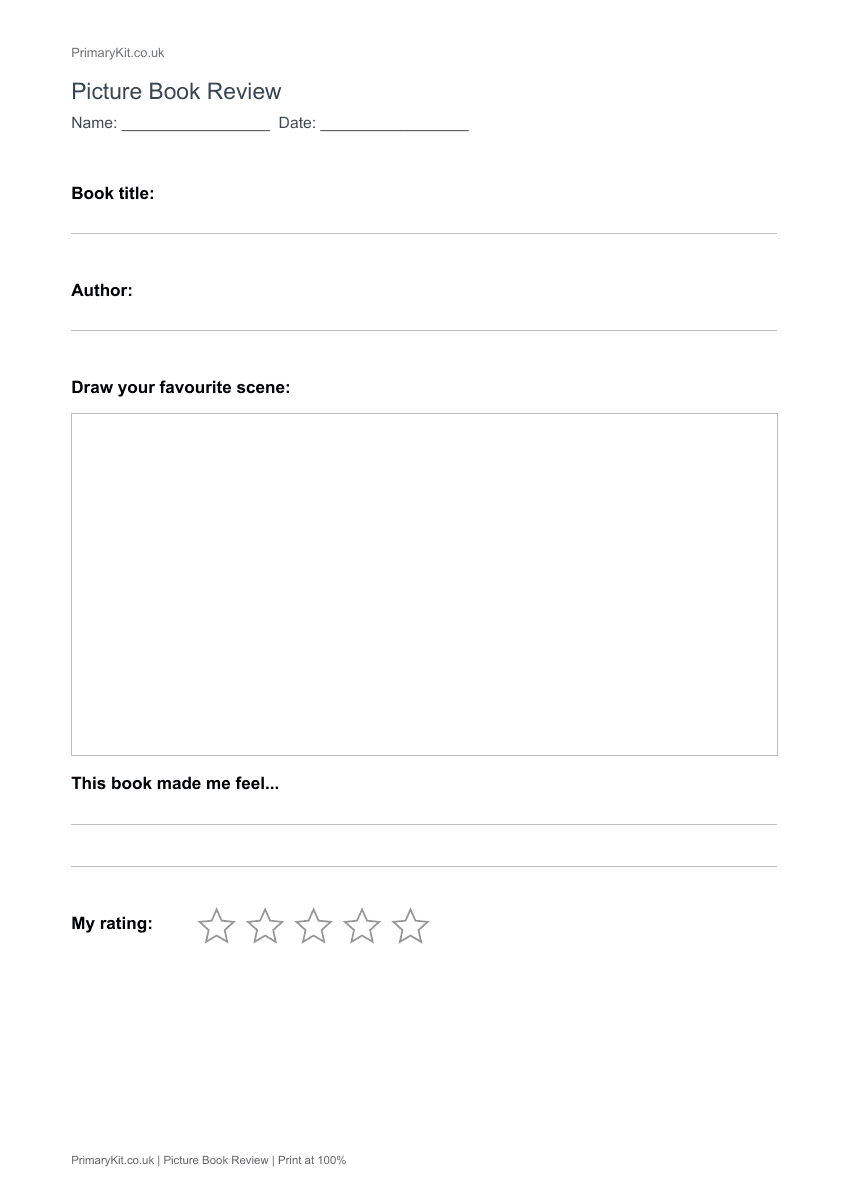
Write the title and author, draw your favourite scene in a large box, explain how the book made you feel and add a star rating. An adult can scribe while a younger child talks and draws.
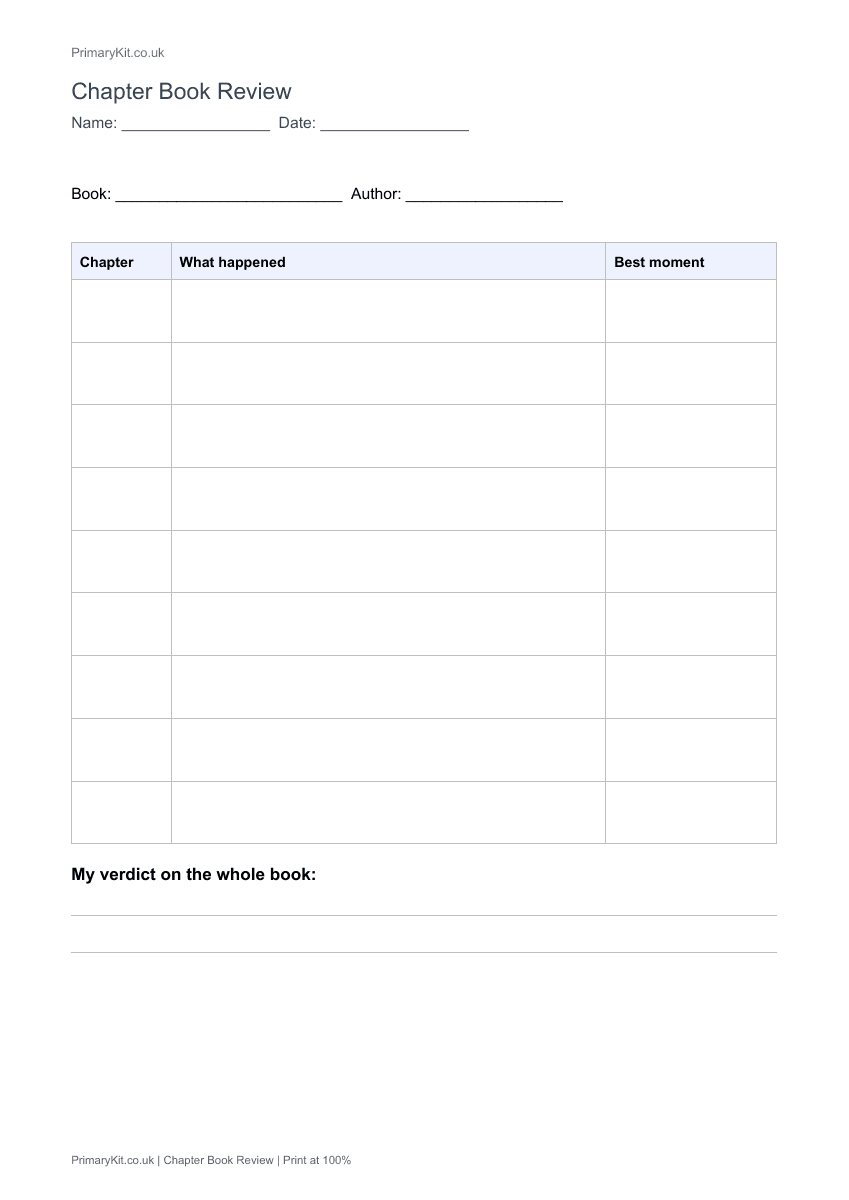
Record the book title and author, then use nine rows for chapter number, what happened and the best moment. Finish with a whole-book verdict. Print another copy for a longer book.
Reading Challenge
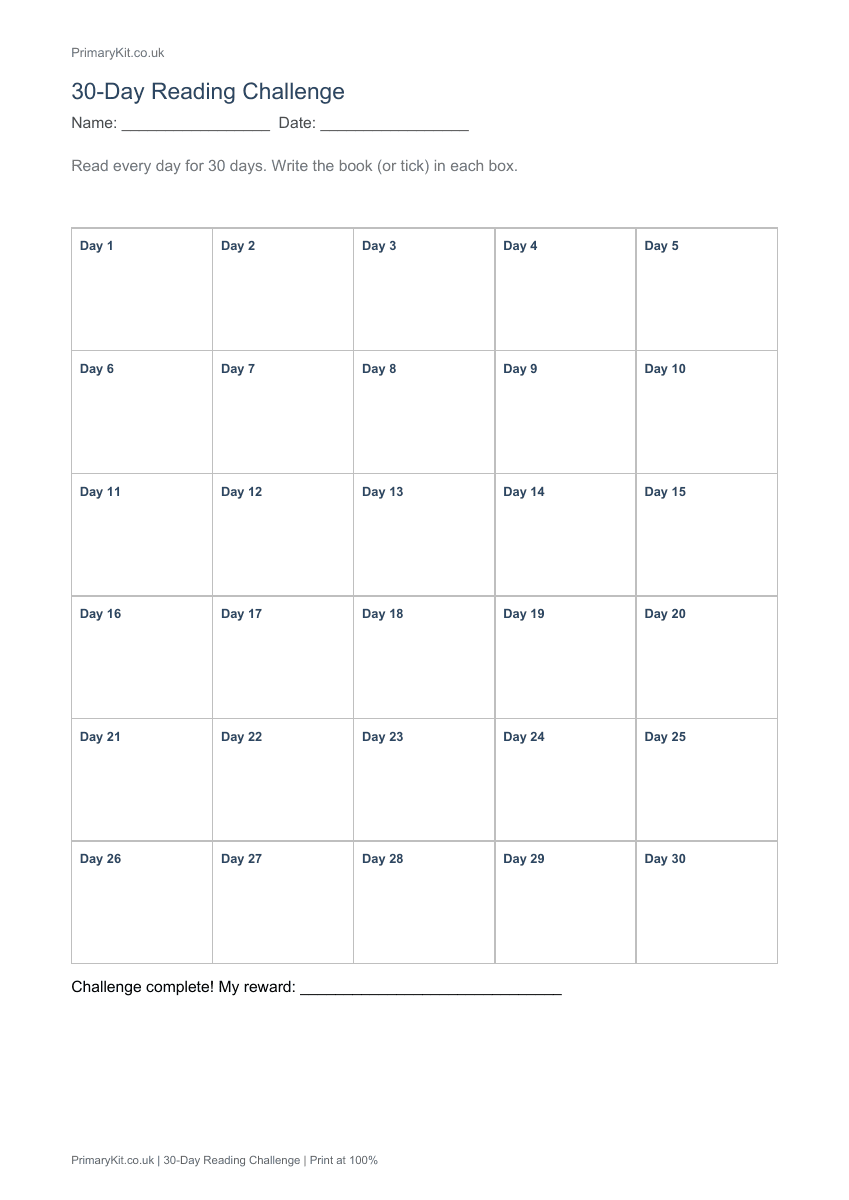
Numbered thirty-cell grid to tick off daily reading — one square per day for a month-long streak challenge. Minimal columns; focus is consistency not volume detail.
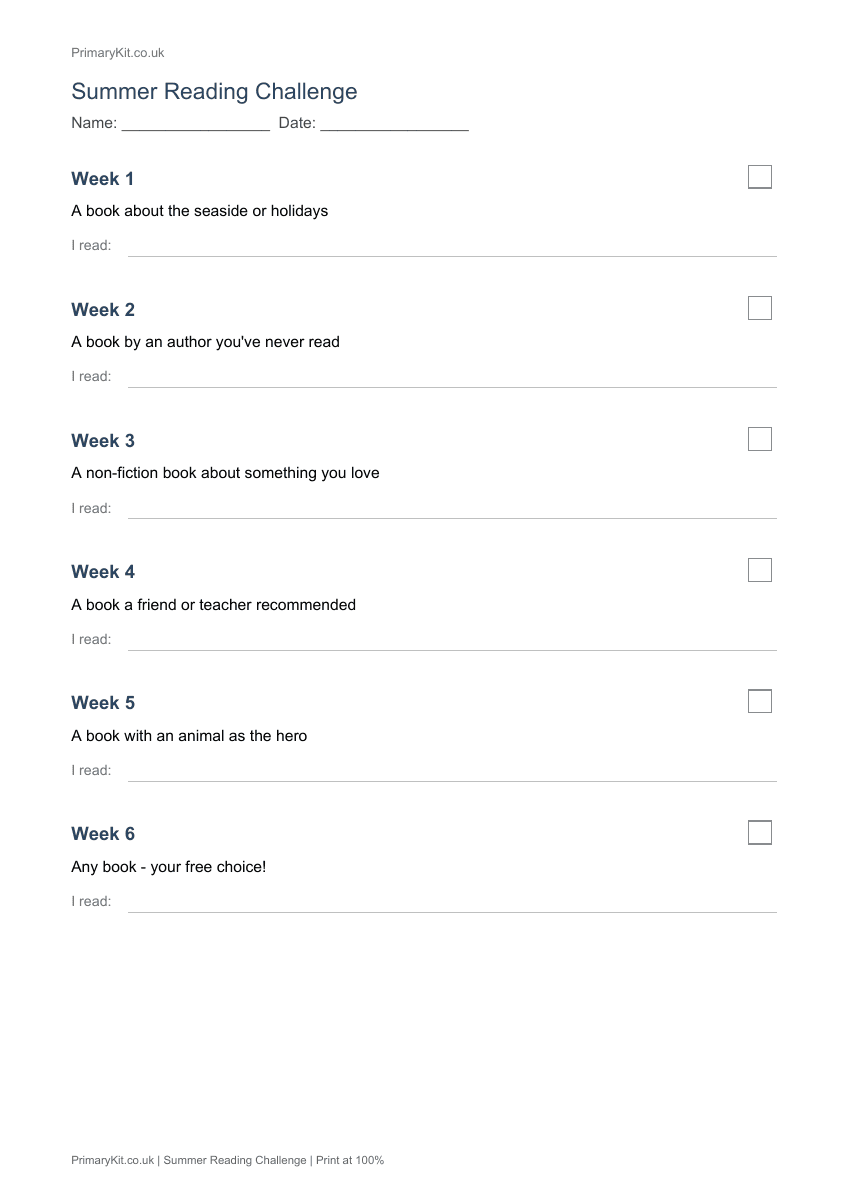
Six weekly themed rows with checkboxes — stretch summer reading across the holiday without daily pressure. Each week suggests a theme or goal to tick when met.
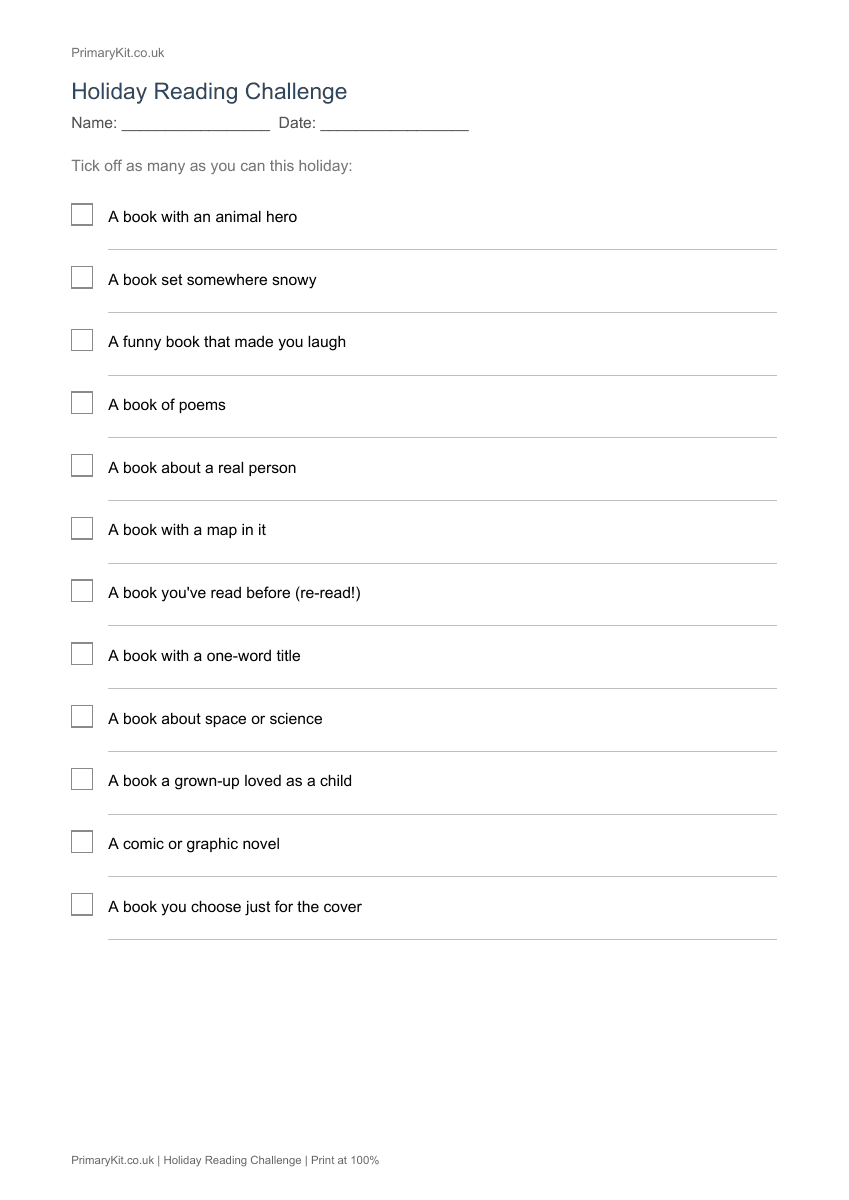
Twelve themed prompts — e.g. a book with an animal hero — each with a checkbox when completed. Prompt list pushes variety during half term or Easter break.
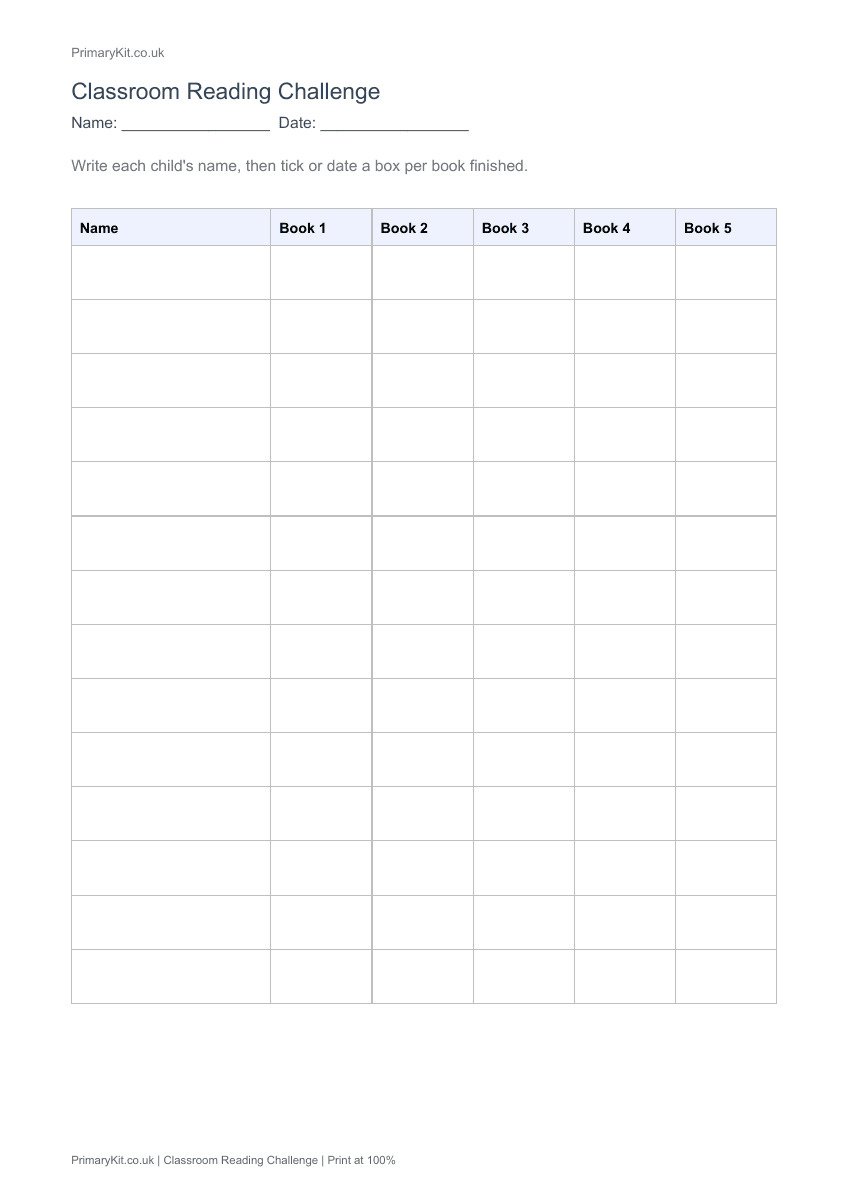
14 name rows with five book-completion boxes per reader. Tick or date each box when a book is finished. Keep book titles in a separate reading log if needed.
Reading Journal
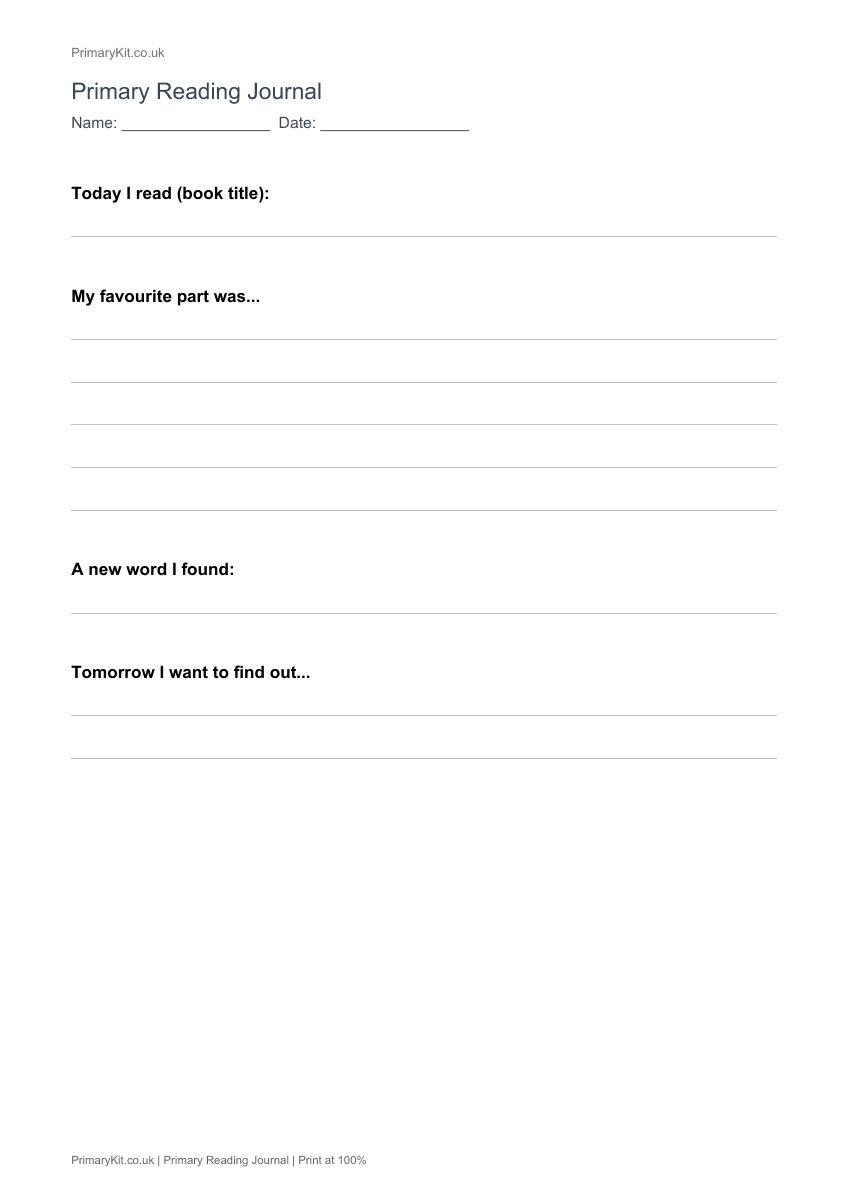
Write the book title, describe a favourite part, note a new word and say what you want to discover next. Includes name and date. Children can discuss their ideas before writing.
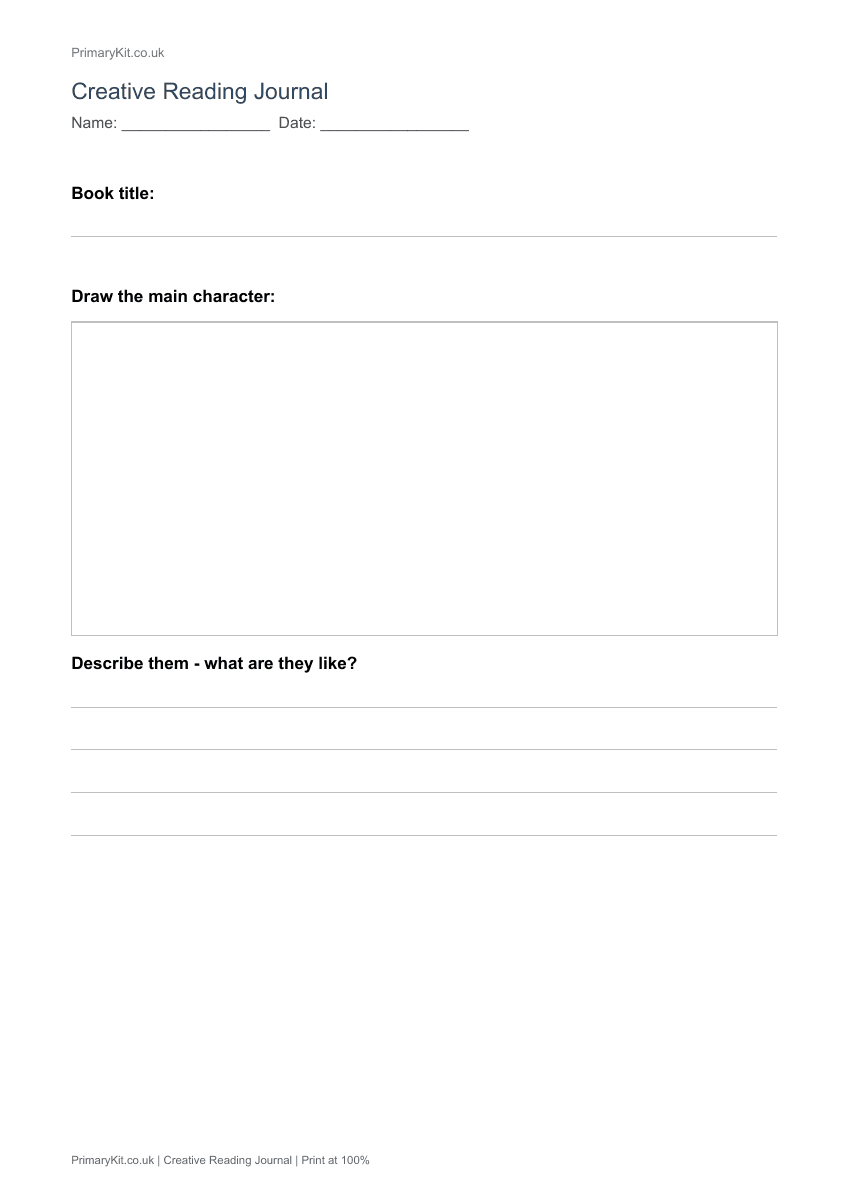
'Draw the main character' box sits above writing lines — creative response to fiction read. Blends art and literacy for children who express ideas visually first.
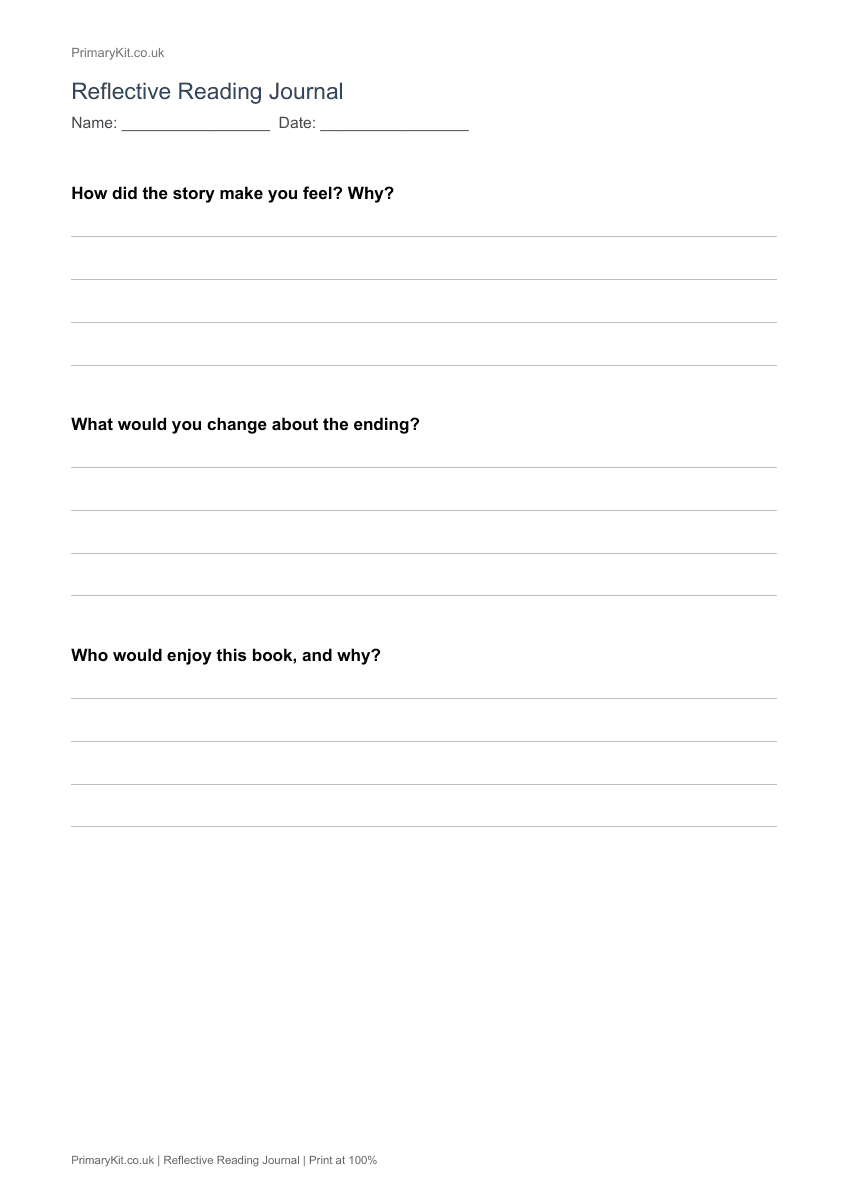
Three prompts ask how the story made you feel, what you would change about the ending and who would enjoy the book. Four ruled lines per response support a brief explanation with reasons.
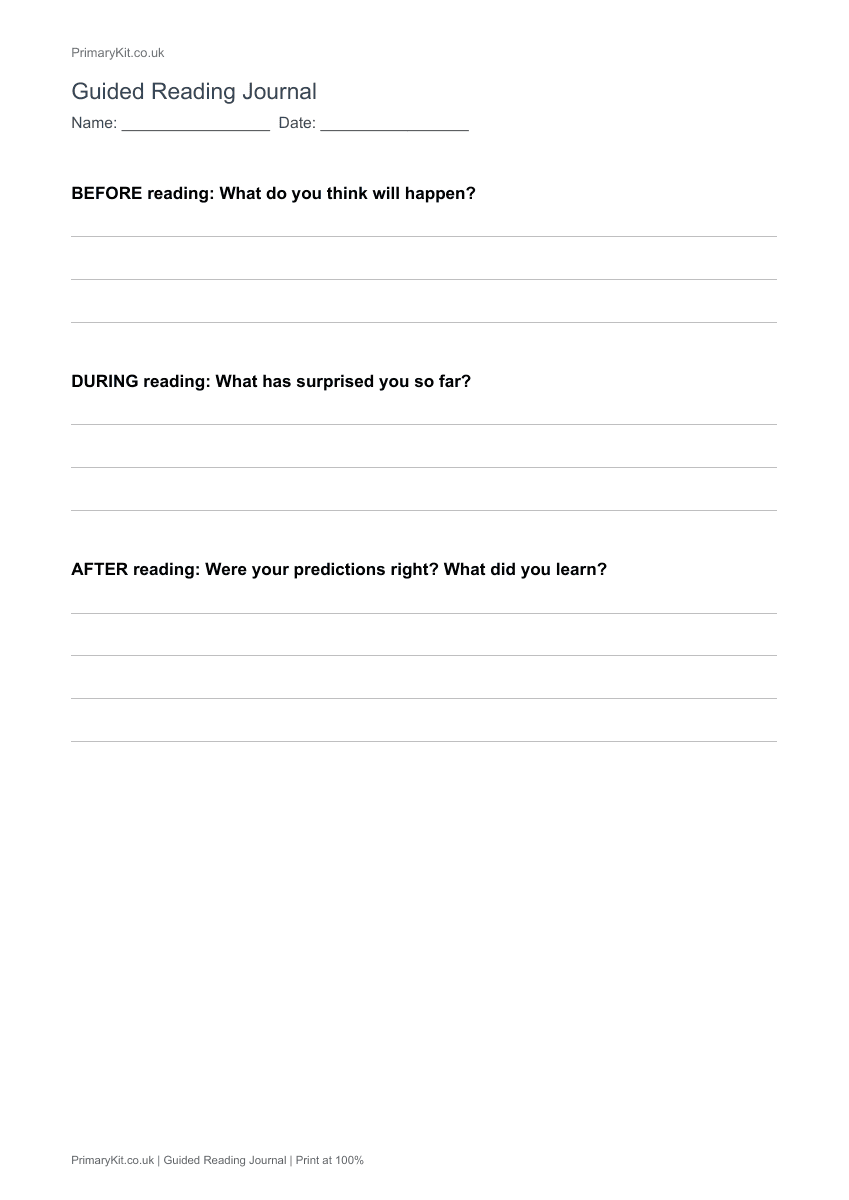
Three sections guide a reading session: predict before reading, note surprises during reading, and revisit predictions afterwards. Discuss ideas with an adult or partner before writing.