PrimaryKit

Handwriting

Handwriting Resources

Free printable handwriting paper, letter tracing, number tracing and cursive practice for Reception to Year 6.

Lined Paper

8 sheets
All Years

Lined Paper

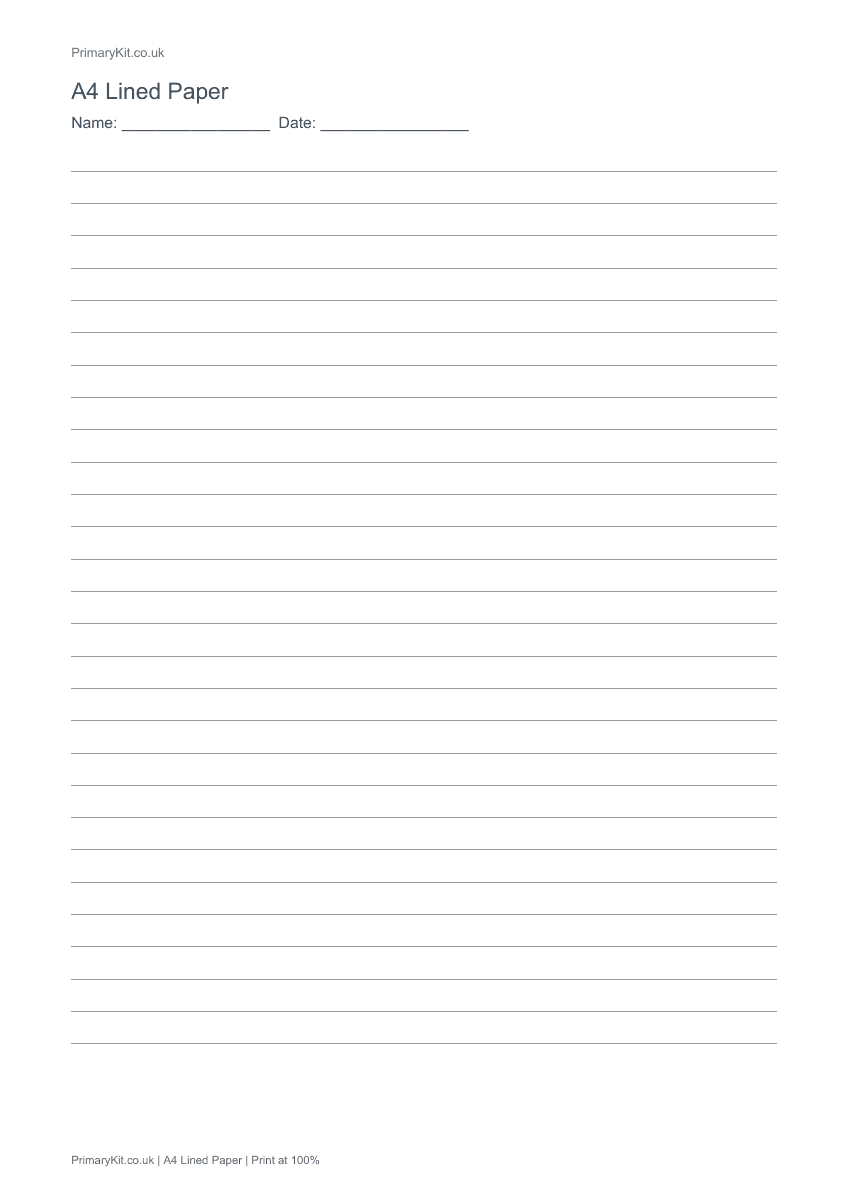
A4 Lined Paper

Standard A4 ruled paper with 8mm lines and a name-and-date header at the top. Ideal for everyday writing across Reception to Year 6 when children need a familiar school-style layout for stories, notes, or spelling sentences.

Download PDF
All Years

Lined Paper

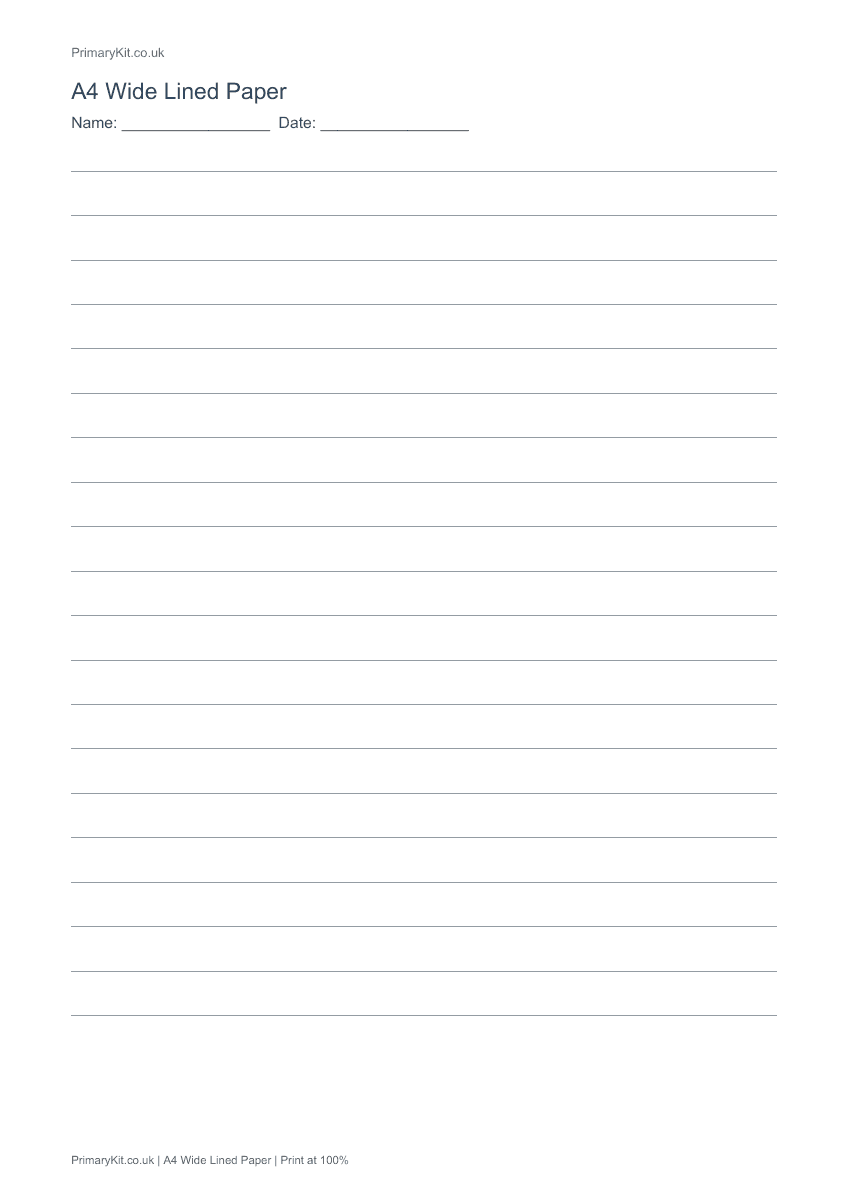
A4 Wide Lined Paper

Generous 11mm ruled lines give developing writers room to form letters without crowding. The name-and-date header keeps work organised, making this sheet a gentle step up from Reception paper for Years 1–3.

Download PDF
All Years

Lined Paper

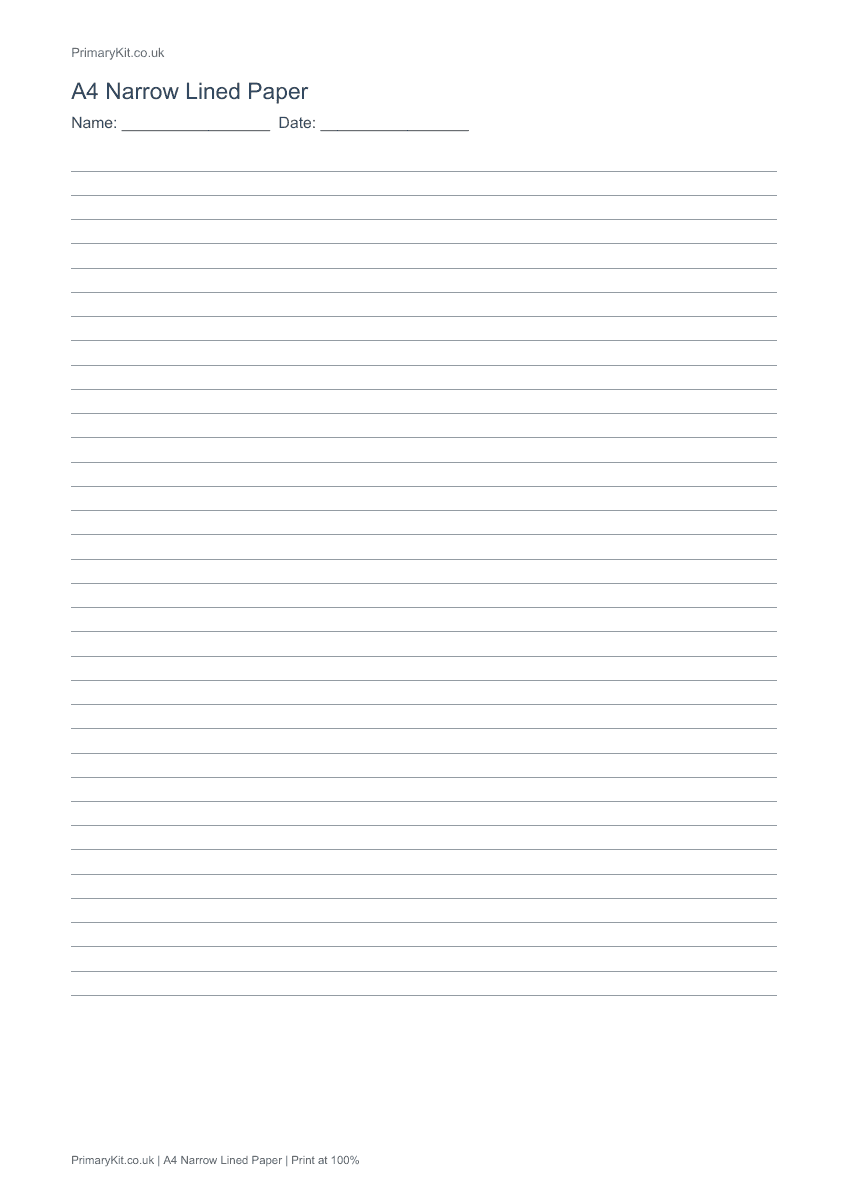
A4 Narrow Lined Paper

Compact 6mm lines suit confident writers in Years 5–6 who produce smaller, fluent script. The standard name-and-date header mirrors secondary-style exercise books while staying on familiar A4.

Download PDF
All Years

Lined Paper

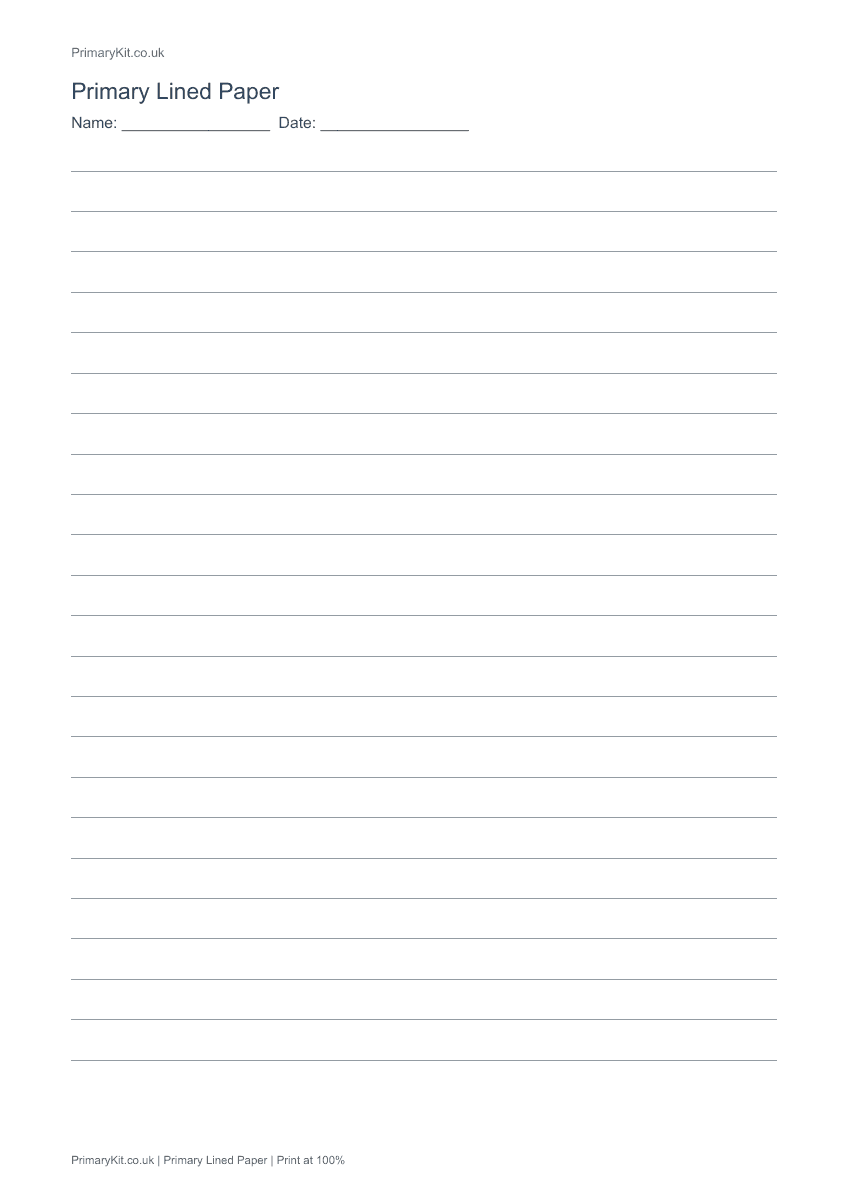
Primary Lined Paper

Classic primary-school ruling at 10mm — the line height many UK classrooms use for general writing. A name-and-date header tops the page so homework and classwork look instantly recognisable to parents and teachers.

Download PDF
All Years

Lined Paper

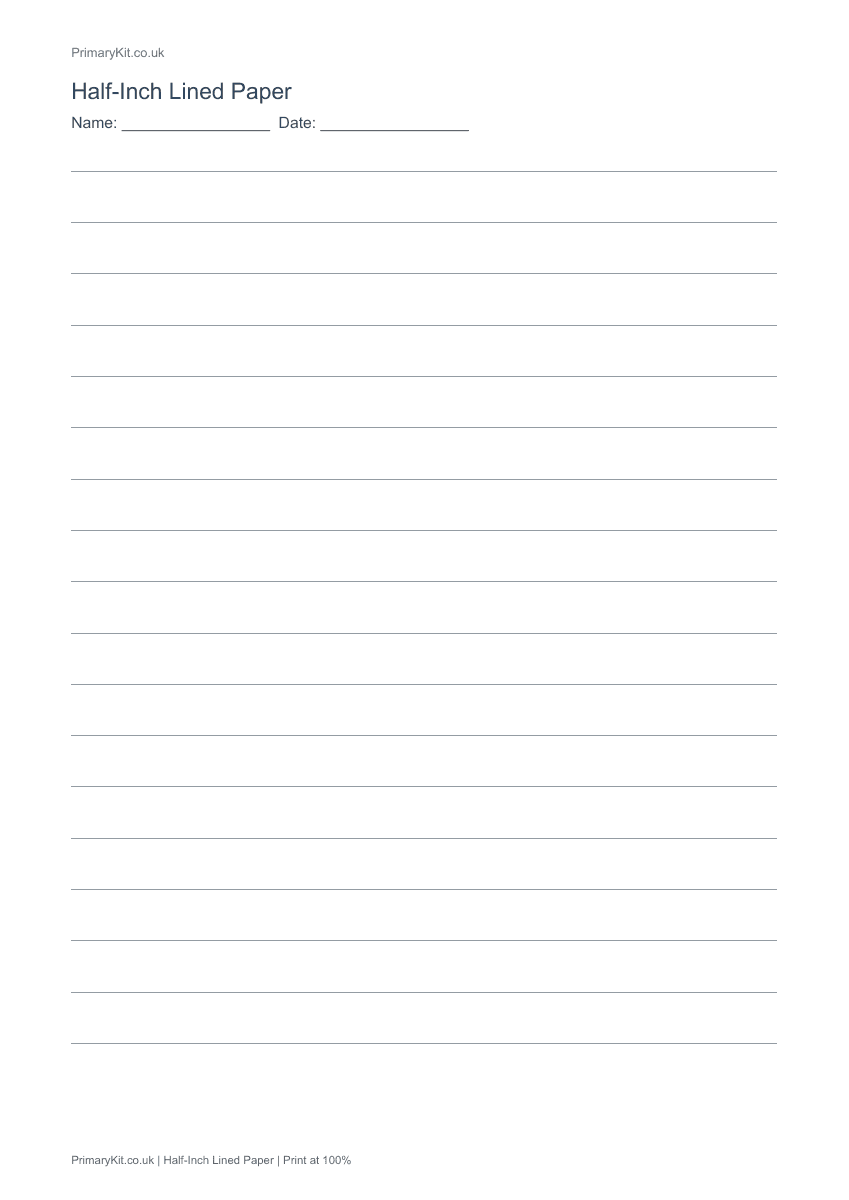
Half-Inch Lined Paper

Half-inch (12.7mm) lines bridge wide primary paper and everyday narrow ruling — helpful when a child writes large but no longer needs Reception-width space. Includes the usual name-and-date header.

Download PDF
All Years

Lined Paper

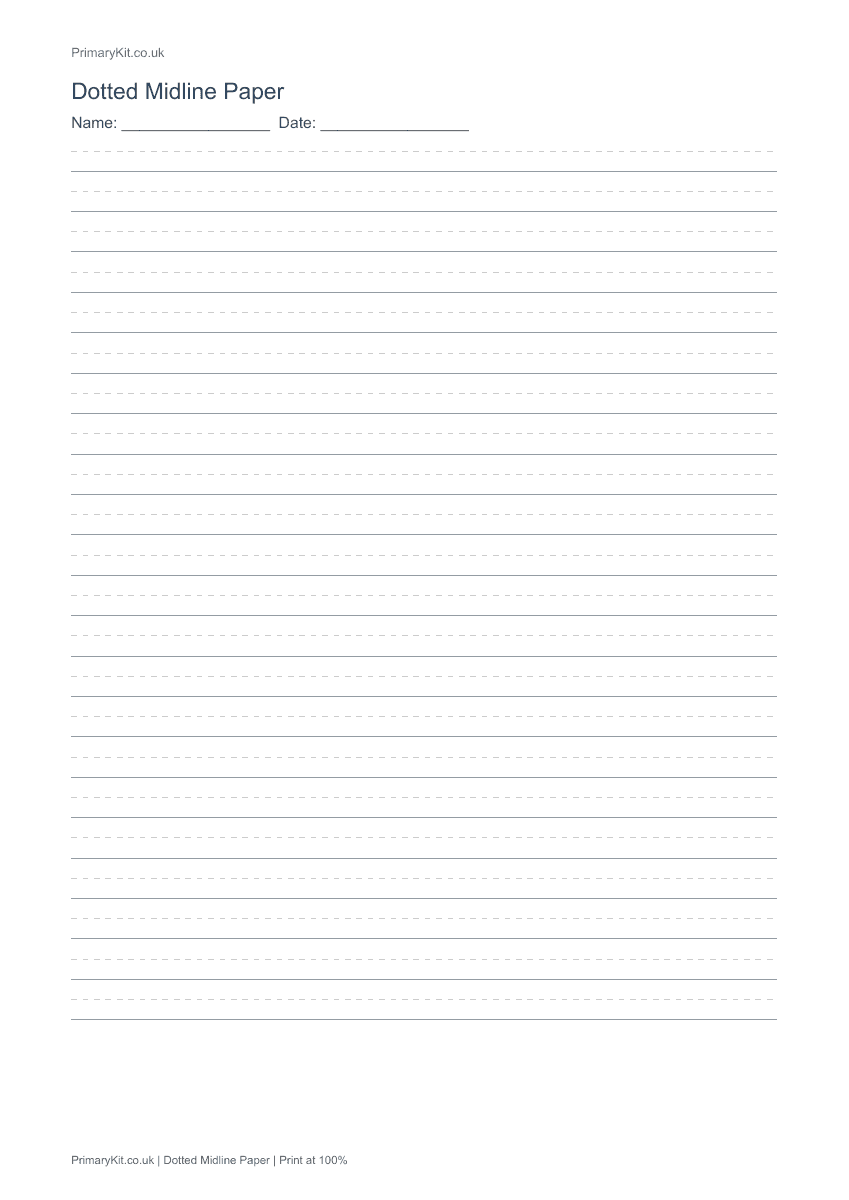
Dotted Midline Paper

Ruled lines with a dotted midline guide show where lowercase letters sit and where ascenders reach. The 8mm-style layout supports correct letter height for children learning consistent sizing in Years 1–4.

Download PDF
All Years

Lined Paper

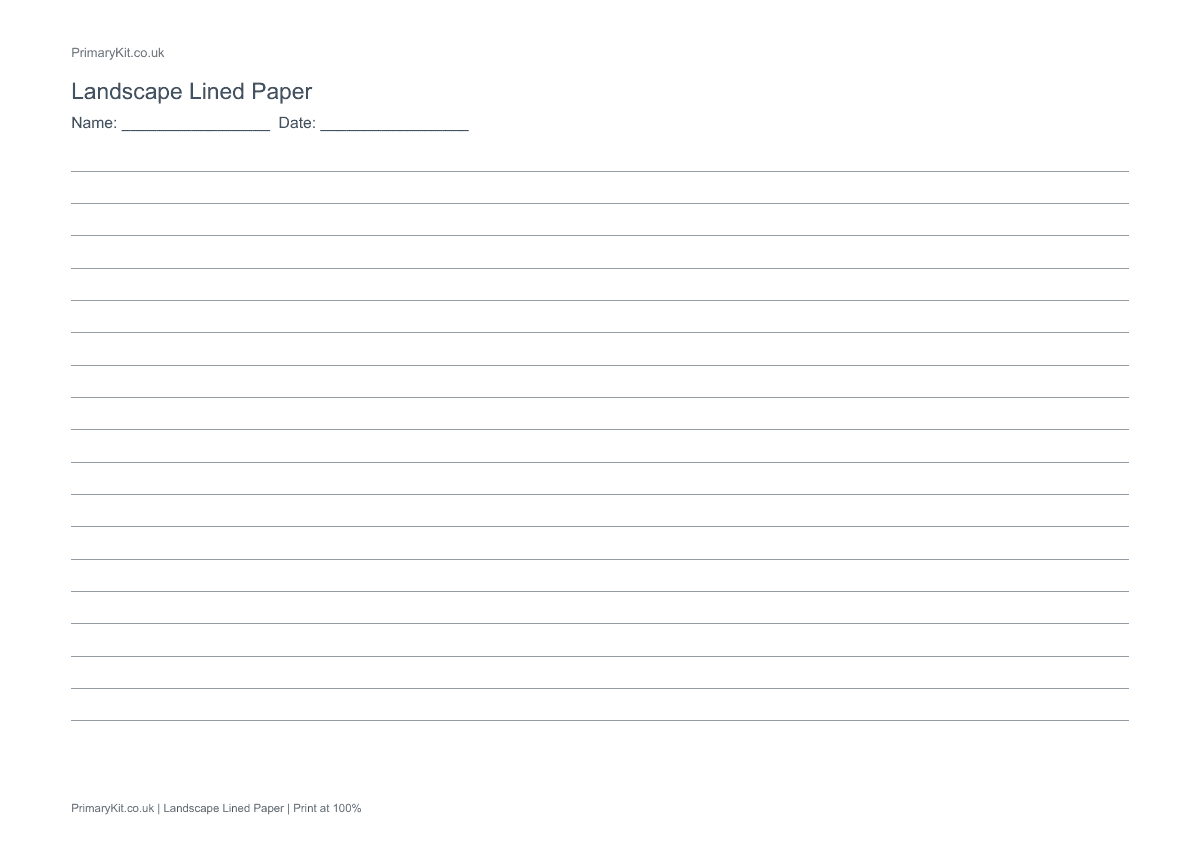
Landscape Lined Paper

A4 turned landscape gives a wider writing line — useful for timelines, labelled diagrams, or children who prefer horizontal space. Standard ruled lines run across the long edge with a name-and-date header.

Download PDF
Reception

Lined Paper

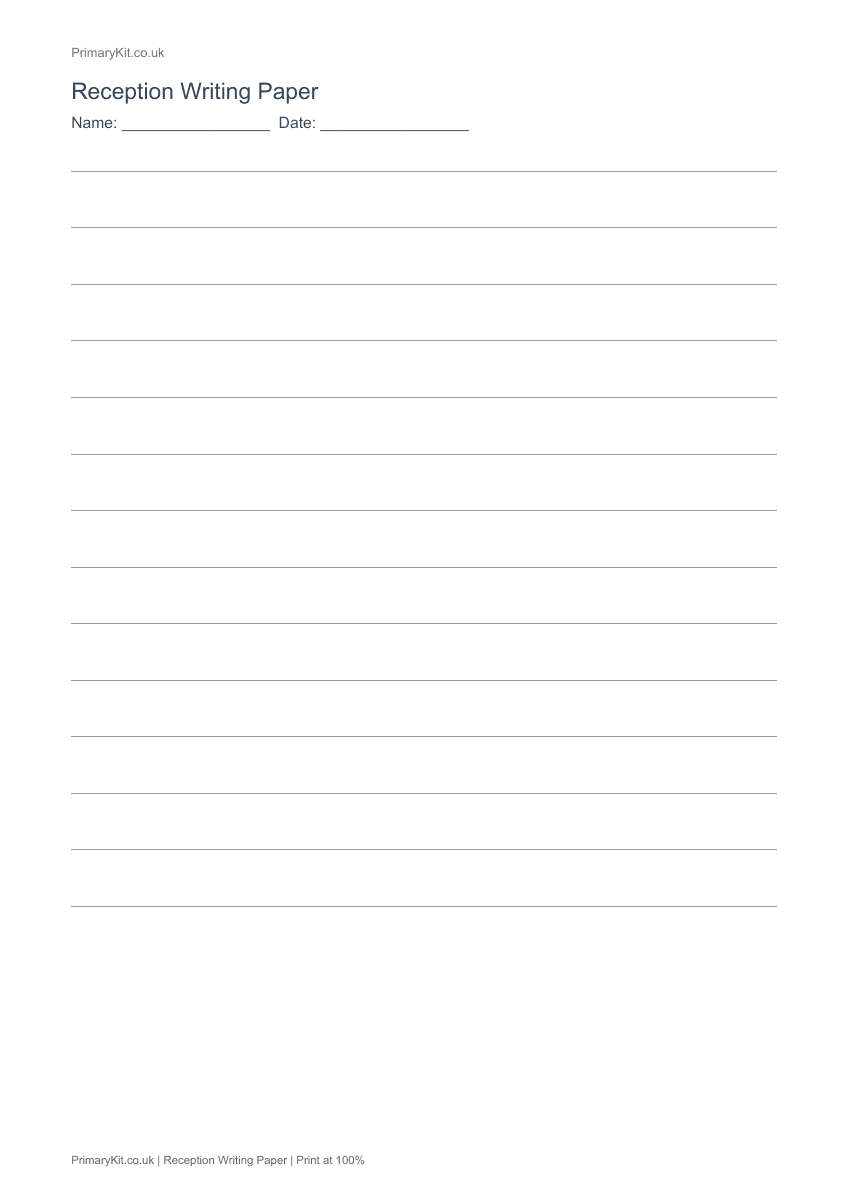
Reception Writing Paper

Extra-wide 14mm lines give Reception children the space early writers need. The generous ruling supports mark-making moving into letter formation, with a simple header for name and date.

Download PDF

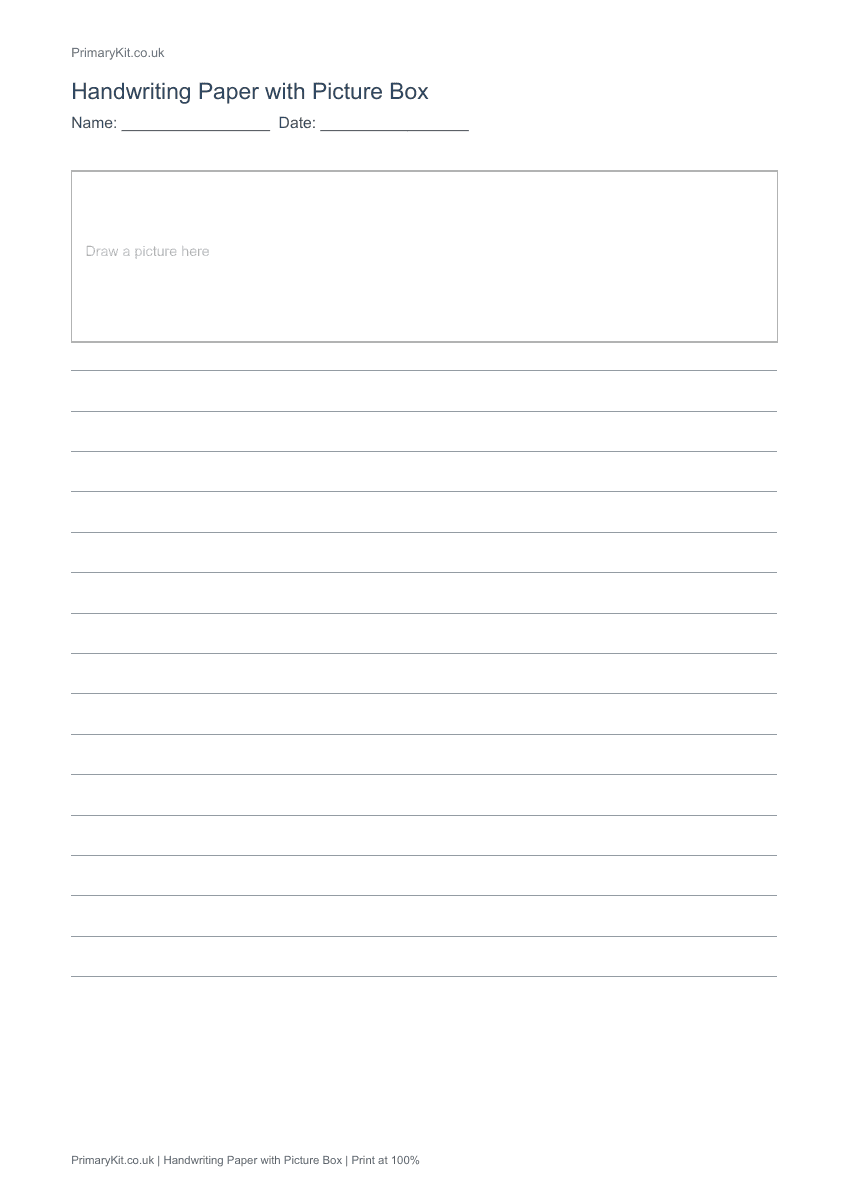
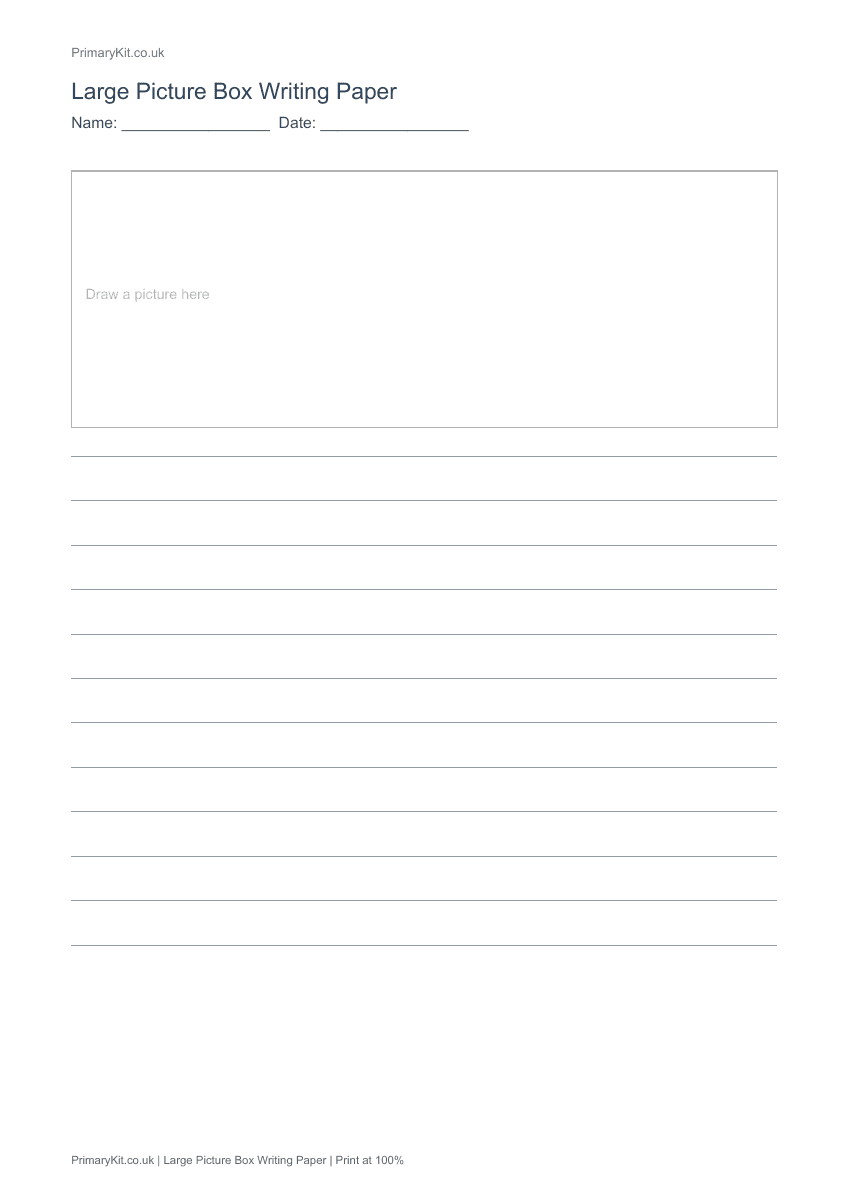
Handwriting Paper with Picture Box

2 sheets

Letter Tracing

10 sheets
Reception

Letter Tracing

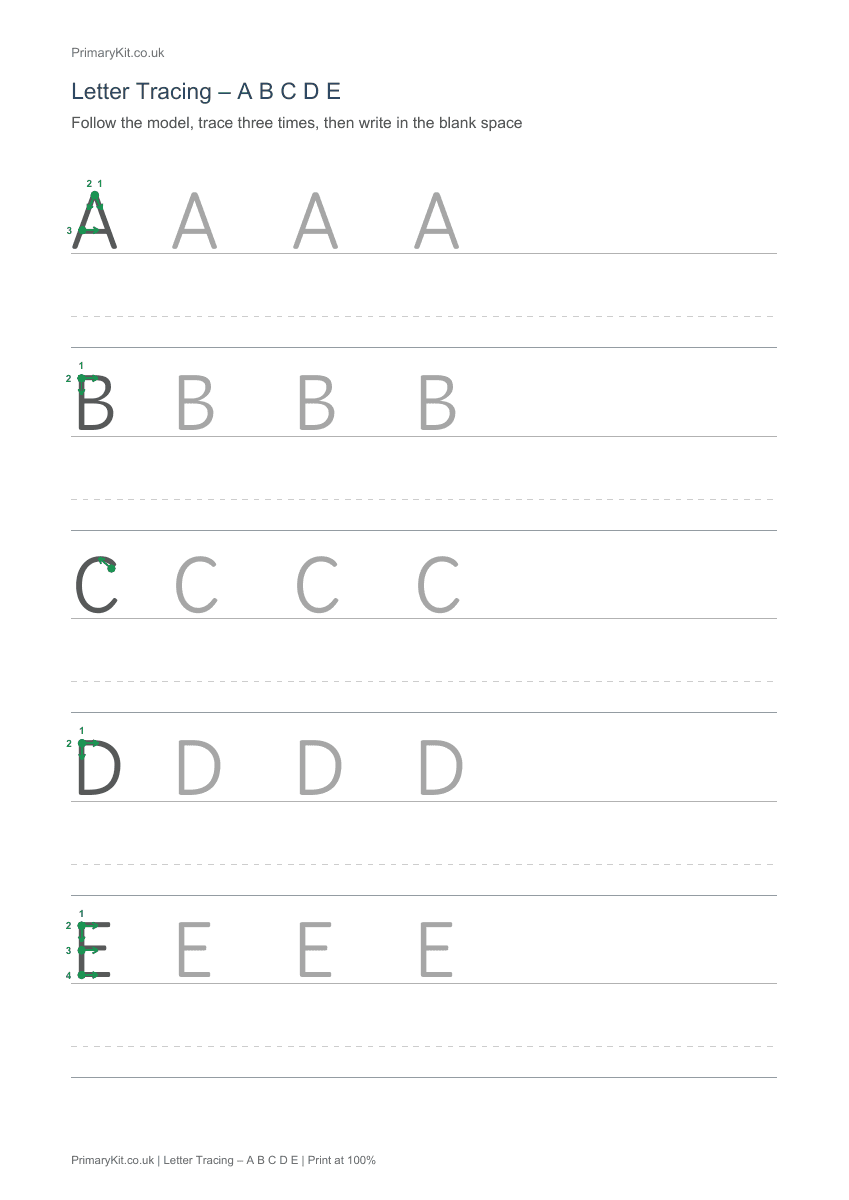
Letter Tracing – A B C D E

Reception sheet for letters A–E: each letter has a row of grey models to trace, then a dotted-midline practice line. Builds correct starting points for the first letters many children learn in phonics.

Download PDF
Reception

Letter Tracing

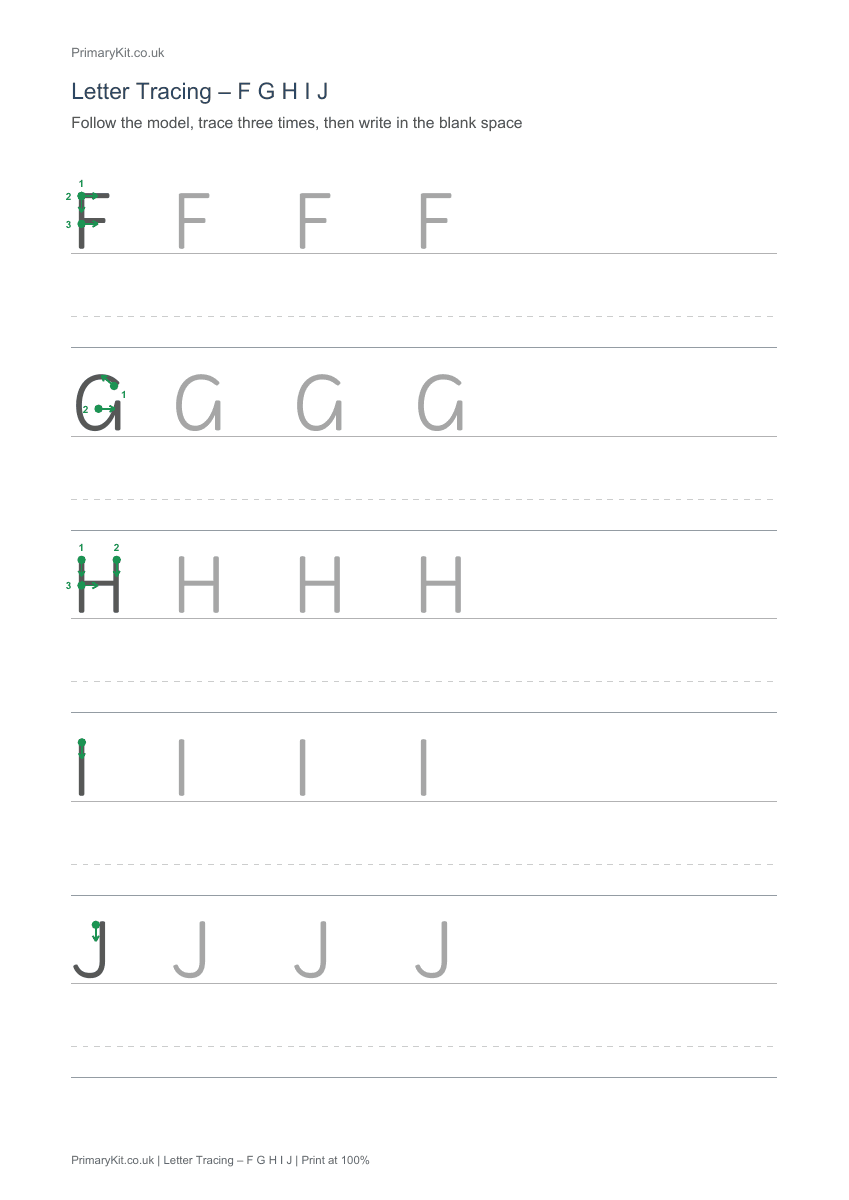
Letter Tracing – F G H I J

Grey trace-and-copy rows for F, G, H, I, and J with dotted midline guides. Reception-friendly layout helps children master tall letters like h and tricky curves on g and j.

Download PDF
Reception

Letter Tracing

Letter Tracing – K L M N O

Mid-alphabet capitals K through O on one Reception tracing sheet. Grey exemplars show letter height on the dotted midline; blank practice rows let children write independently after tracing.

Download PDF
Reception

Letter Tracing

Letter Tracing – P Q R S T

Capital letters P–T with grey models and dotted-midline practice lines. Covers letters with vertical stems and bowls (p, q) and the diagonal r — common stumbling blocks in Reception writing.

Download PDF
Reception

Letter Tracing

Letter Tracing – U V W X Y Z

Final Reception capital set: U through Z. Trace the grey letters, then write on dotted midlines — including diagonal letters v, w, x, y, and z that children often draw as separate strokes.

Download PDF
Reception

Letter Tracing

Letter Tracing – Lowercase a-e

Lowercase a–e on dotted midlines: grey trace rows teach bowl-and-stick shapes for a and d, round e, and correct b height. Built for Reception when lowercase joins daily writing.

Download PDF
Reception

Letter Tracing

Letter Tracing – Lowercase f-j

Lowercase f, g, h, i, and j with descenders and dots — grey models show how far g and j drop below the line. Dotted midline practice rows follow each traced letter.

Download PDF
Reception

Letter Tracing

Letter Tracing – Lowercase k-o

Mid-alphabet lowercase k–o: tracing rows for letters with diagonals, humps, and the round o shape. Reception layout with grey exemplars and independent practice lines.

Download PDF
Reception

Letter Tracing

Letter Tracing – Lowercase p-t

Lowercase p–t tracing for Reception — includes ascenders and descenders on p and q, plus r and s curves. Each letter has grey models and a dotted-midline copy row.

Download PDF
Reception

Letter Tracing

Letter Tracing – Lowercase u-z

Complete lowercase tracing with u–z: diagonals on v, w, x, y, and z on dotted midlines. Grey trace rows help Reception children finish the alphabet before moving to independent writing.

Download PDF

Number Tracing

10 sheets
Reception

Number Tracing

Number Tracing – 0

Reception number 0 sheet: four rows of grey zeroes to trace, plus a 'draw spots to match' box for zero items — reinforcing that zero means none. Builds anti-clockwise oval formation.

Download PDF
Reception

Number Tracing

Number Tracing – 1

Trace the numeral 1 with grey models starting at the top, then practise on dotted lines. The counting box asks children to draw one spot — linking formation to the quantity one.

Download PDF
Reception

Number Tracing

Number Tracing – 2

Grey trace rows for number 2 with the classic curve-then-diagonal formation, plus a box to draw two spots. Helps Reception children avoid reversing 2 or writing it like a capital Z.

Download PDF
Reception

Number Tracing

Number Tracing – 3

Number 3 tracing with emphasis on two open curves — a digit Reception children often reverse or close into an 8. Four grey rows plus a three-spot counting box connect shape to quantity.

Download PDF
Reception

Number Tracing

Number Tracing – 4

Trace number 4 with grey exemplars showing down-across-down strokes (or open-top four, depending on school style). The counting box holds four drawn spots to tie formation to counting.

Download PDF
Reception

Number Tracing

Number Tracing – 5

Number 5 tracing: grey models show the short top bar and open belly children sometimes fill in wrongly. Draw five spots in the match box to reinforce the quantity while practising formation.

Download PDF
Reception

Number Tracing

Number Tracing – 6

Trace 6 starting in the top-right curve — a formation that stops the digit becoming a 9. Reception sheet includes grey rows and a six-spot counting area for quantity link.

Download PDF
Reception

Number Tracing

Number Tracing – 7

Number 7 tracing with grey models showing the horizontal top and diagonal stem — children sometimes add a crossbar like on printed 7. Counting box for seven spots reinforces the value.

Download PDF
Reception

Number Tracing

Number Tracing – 8

Figure-eight formation for number 8: four grey trace rows on dotted lines, plus draw-eight-spots box. Reception children learn continuous loop without separating into two circles.

Download PDF
Reception

Number Tracing

Number Tracing – 9

Number 9 tracing — circle-first formation that pairs naturally with 6 for reversal work. Grey exemplars and a nine-spot counting box support Reception number writing.

Download PDF

Cursive Practice

10 sheets
Year 3

Cursive Practice

Cursive Alphabet Practice

Full lowercase cursive alphabet with grey exemplars above dotted-midline practice rows — the Year 3 introduction layout many UK schools use when joining begins. One sheet covers a–z for reference and daily drill.

Download PDF
Year 3

Cursive Practice

Cursive Lowercase Letters

Year 3 lowercase cursive focus sheet: grey joined letters with exit strokes visible, then dotted-midline rows for independent practice. Ideal when children know individual letters but need uniform joins.

Download PDF
Year 3

Cursive Practice

Cursive Uppercase Letters

Year 3 capital cursive letters with grey models — fewer joins than lowercase but essential for names and sentence starts. Dotted midline rows follow each traced capital.

Download PDF
Year 3

Cursive Practice

Joined Handwriting Practice

Year 3 join drills for common digraph joins: ch, sh, th, ai, and ee. Grey exemplar pairs sit above dotted-midline rows so children feel how letters flow together in real words.

Download PDF
Year 4

Cursive Practice

Cursive Word Practice

Year 4 high-frequency words in cursive: grey exemplars above dotted-midline rows for words children must read and write fluently. Bridges letter drills and full sentences.

Download PDF
Year 4

Cursive Practice

Cursive Sentence Practice

Year 4 pangram sentences in cursive — grey full lines above dotted-midline copy rows. Pangrams use every letter, giving balanced practice for ascenders, descenders, and joins in context.

Download PDF
Year 3

Cursive Practice

Year 3 Cursive Starter

Year 3 entry-level cursive sheet with short exemplar phrases and dotted-midline rows — gentler than full pangrams. Designed for children newly expected to join in class.

Download PDF
Year 4

Cursive Practice

Year 4 Cursive Practice

Year 4 cursive consolidation: longer exemplar passages and multiple dotted-midline copy blocks. Expects secure joins and focuses on even sizing and spacing across lines.

Download PDF
Year 5

Cursive Practice

Year 5 Cursive Fluency

Year 5 fluency sheet with extended cursive passages on dotted midlines — less tracing, more sustained copying. Targets speed with legibility for children writing lengthier KS2 assignments.

Download PDF
Year 6

Cursive Practice

Year 6 Cursive Mastery

Year 6 pen-licence level sentences: formal exemplar lines and dotted-midline copy space for mature, consistent cursive. Suitable for leavers' books, speeches, and polished final drafts.

Download PDF

Can't find exactly what you need?

Build a custom worksheet with your chosen year group and difficulty.

Open the worksheet generator →